
I used to think math and crochet lived in two completely different worlds. Math was something I dreaded in school. Crochet was my happy place, my hobby, my quiet hour with a cup of tea and a hook. Then one day I sat down to make a simple granny square blanket, and by row four, my edges looked like a staircase. That’s when I realized crochet mathematics for beginners isn’t optional — it’s the quiet skeleton holding every pretty project together.
Here’s the good news. You don’t need to be good at math to be good at crochet math. You just need to understand a handful of patterns, and once they click, they click for good.
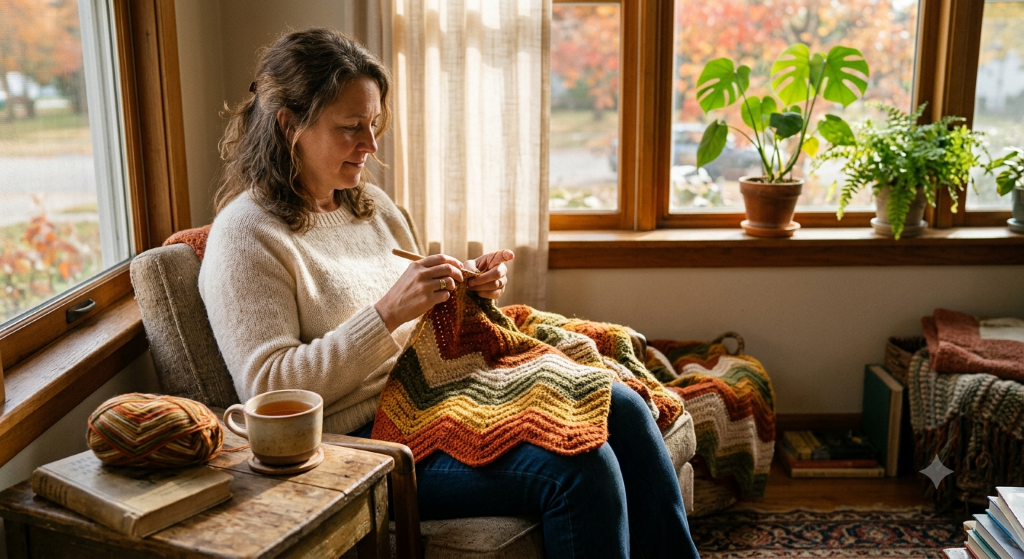
Why Stitch Counts Matter More Than You Think
Every crochet pattern is really just a set of instructions built on numbers. The number of chains you start with. The number of stitches in each row. The number of times a sequence repeats before you move to the next part.
When one of those numbers goes off track, it doesn’t stay contained. It travels. A miscount on row two becomes a lopsided row six, and by the time you notice, you’re unraveling half an evening’s work.
I always tell beginners this: counting your stitches at the end of every row isn’t a suggestion, it’s a habit worth building early. It takes ten seconds. Frogging a project takes an hour.
A few quick habits that save you:
- Count out loud or in your head after every row, not just when something feels wrong
- Use stitch markers on the first and last stitch of tricky rows
- Keep a small notepad or app note with your running count
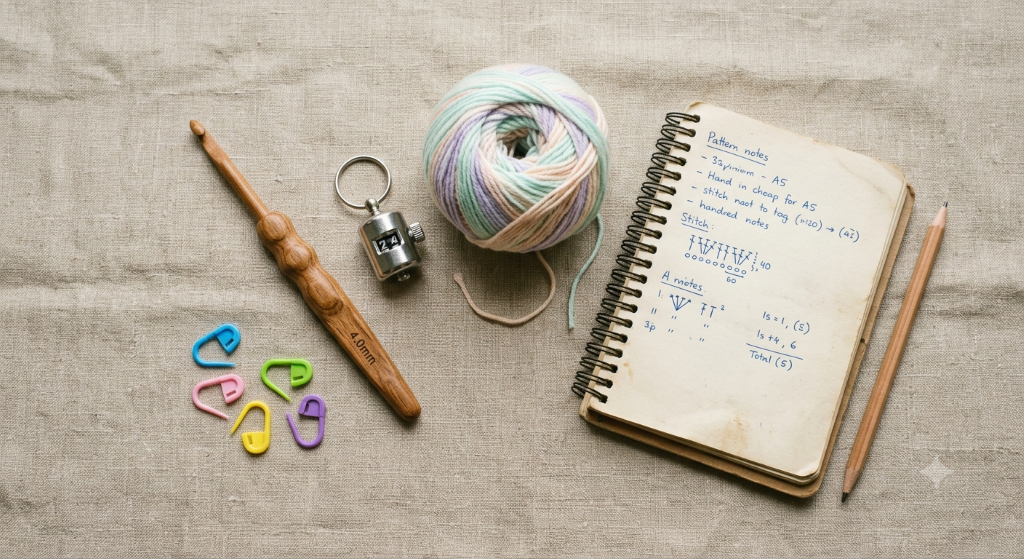
Understanding Multiples (And Why Patterns Love Them)
If you’ve ever read a pattern that says something like “chain a multiple of 4, plus 2,” and felt your stomach drop, you’re not alone. This is one of the biggest hurdles in crochet mathematics for beginners, but it’s also one of the simplest once it’s explained properly.
A multiple just means a number you can reach by repeating a smaller number over and over. Multiples of 4 are 4, 8, 12, 16, 20, and so on. The “plus 2” part is called a turning chain or edge stitch allowance — extra stitches added so your pattern lines up neatly at the edges instead of cutting off mid-repeat.
Think of it like tiling a floor. If your tile pattern repeats every four tiles, you can’t stop halfway through a tile and expect it to look finished. The same logic applies to stitch patterns. Shells, chevrons, ripple stitches — nearly all of them rely on multiples to keep their shape consistent from one side of your project to the other.
Once you start recognizing this, you’ll notice something freeing: you can resize almost any pattern yourself. Want a wider scarf? Just add another full multiple to your starting chain, not just any random number.
Rows, Repeats, and Keeping Your Sanity
Rows and repeats are where crochet math for beginners really starts to feel like a rhythm instead of a chore. A repeat is simply a sequence of stitches you do again and again within a row, and sometimes across several rows too.
Patterns usually write this using brackets or asterisks, something like:
- Chain 3, turn
- *Double crochet in next stitch, chain 1, skip 1 stitch* repeat from * to end
- Repeat rows 2 through 3 until piece measures desired length
That little asterisk is doing a lot of quiet work. It’s telling you exactly what chunk of stitches to repeat, so you’re not guessing your way through row twelve of a blanket.
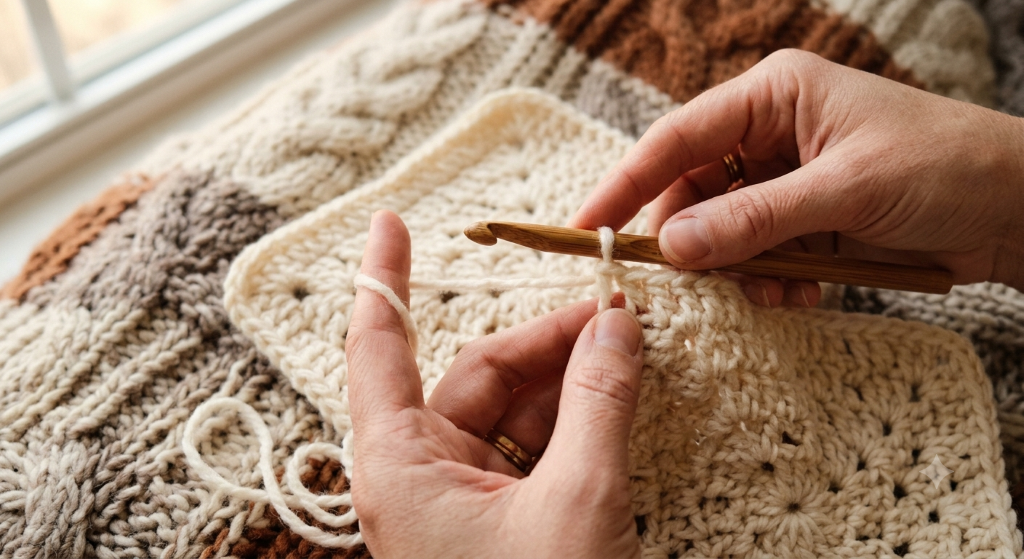
Here’s how I keep track of row repeats without losing my place:
- Use a row counter, whether it’s a physical clicker or a phone app
- Tally marks on paper work just as well if you’re old school like me
- Read the full repeat instructions before you start the row, not stitch by stitch as you go
Common Crochet Math Mistakes (And How to Fix Them)
Even experienced crocheters trip over these sometimes, so don’t feel discouraged if this section sounds familiar.
- Miscounting your foundation chain. Always count twice before you turn and start row one.
- Forgetting the turning chain counts as a stitch (or doesn’t). This varies by stitch type, so check your pattern notes.
- Losing track mid-repeat. Place a marker every time you finish one full repeat, especially in long rows.
- Assuming all patterns use the same math logic. Tunisian crochet, filet crochet, and amigurumi all count differently, so read the pattern’s specific notes rather than relying on habit alone.
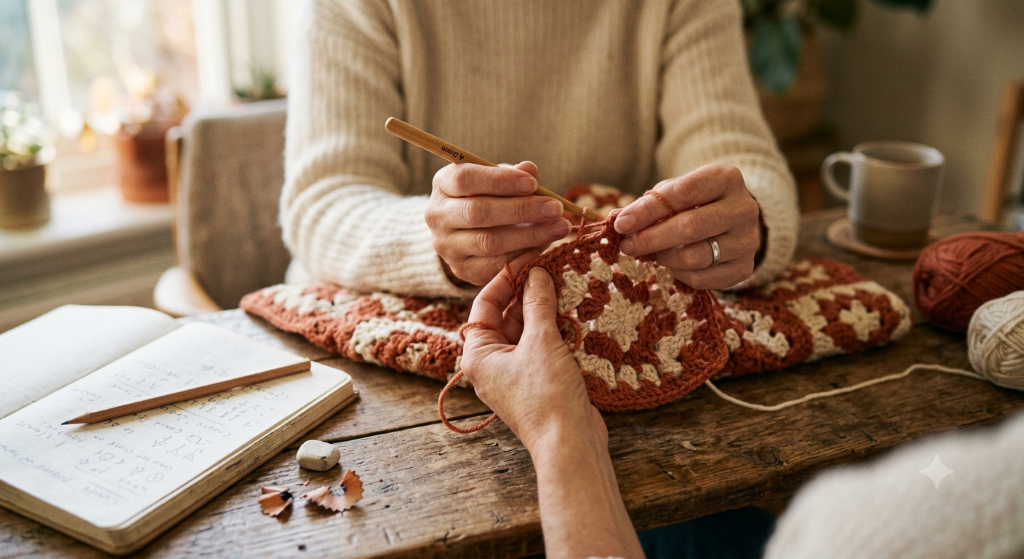
Practice Makes the Numbers Disappear
Something interesting happens once you’ve worked through crochet mathematics for beginners a few times. You stop actively calculating and start just knowing. Your hands recognize when a repeat is off before your brain even finishes the thought. That’s the real goal here, not memorizing formulas, but building an instinct.
Grab a small practice swatch, nothing fancy, and just play with multiples. Try a chain of 20, work a shell stitch pattern, and watch how the numbers behave. Mess it up on purpose once. Fix it. That’s honestly the fastest way to learn.
Crochet was never really about math for me. It was about making something with my hands that felt calm and satisfying. But understanding the numbers underneath it? That’s what turned my wonky first blanket into projects I’m actually proud to give away. Give yourself permission to slow down and count. Your stitches will thank you.
Read More

Be the first to comment