
Does the Crochet Hook Handle Really Matter?
Have you ever sat down to crochet, finished a few rows and realised that your fingers were working harder than they should? Perhaps your stitches look perfectly fine, but the hook doesn’t feel comfortable in your hand. Or maybe you’ve noticed other crocheters using chunky ergonomic hooks while you’re happily working with a simple metal one.
It makes you wonder: does the crochet hook handle really matter, or is it just another detail that crochet tool manufacturers want us to think about?
I believe it matters more than we sometimes realise. The handle is the part of the hook you hold throughout your project, so its shape, thickness, weight and texture can influence how comfortably you crochet. At the same time, a more expensive hook isn’t necessarily a better hook. What feels wonderful in one person’s hand might feel awkward in another’s.
Let’s look at what makes a difference, which handle styles are worth considering, and how you can decide whether your current crochet hook is actually right for you.
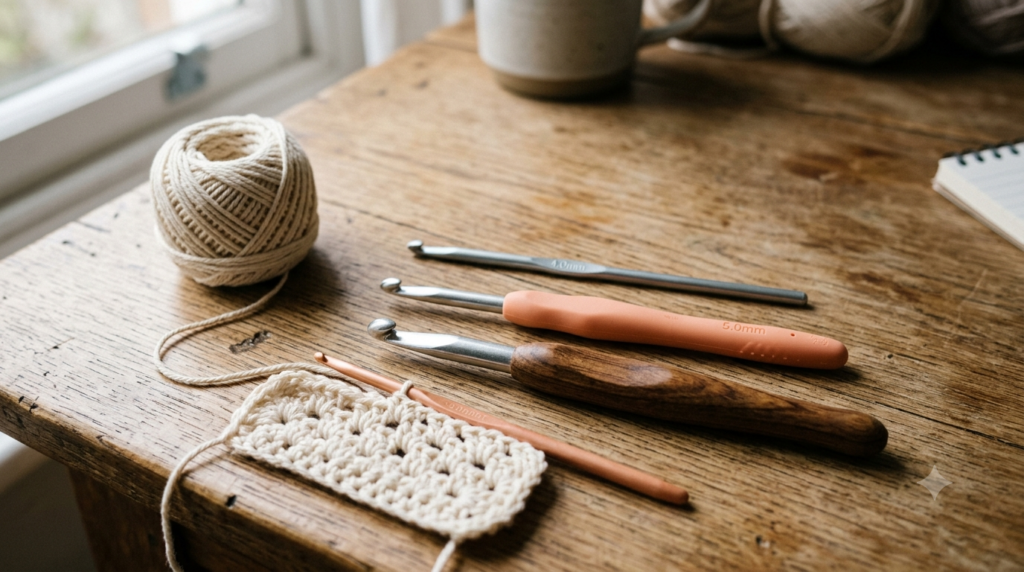
How a Crochet Hook Handle Affects Your Crochet Experience
When we talk about crochet hooks, we usually focus on the hook size, the material or whether the head has a tapered or inline shape. The handle often receives less attention, even though it affects how we hold and move the tool.
Comfort During Long Crochet Sessions
A hook that feels comfortable for ten minutes might feel quite different after an hour of crocheting. This becomes particularly noticeable when you’re working on a large blanket, a long scarf or a detailed amigurumi project that requires repeated, precise movements.
The thickness of the handle can make a difference here. A very slim hook may encourage you to pinch it tightly, while a wider handle might allow your fingers to rest around it more naturally. However, some crocheters find bulky handles restrictive because they prefer the freedom of movement that a traditional metal hook offers.
Handle material matters, too. A smooth metal handle feels different from a rubberised grip, and the weight distribution can affect how the hook moves between your fingers. There isn’t one perfect design for everyone.
If you’re unsure which style suits you, my ultimate guide to choosing the perfect crochet hook is a useful place to explore hook materials and designs in more detail.
Grip and Stitch Control
Have you ever found yourself adjusting your fingers around your hook every few stitches? Or perhaps your hook slips slightly when you’re trying to work through a tight stitch.
The handle can influence how securely you hold the hook and how easily you control its movement. A textured or soft-grip handle may help if your fingers tend to slip on smooth metal. On the other hand, a very thick handle can feel cumbersome if you’re used to making small, precise movements.
It’s important to remember that the handle doesn’t determine stitch quality on its own. Your yarn tension, hook size, technique and familiarity with the stitch all play a role. A comfortable handle can make the process feel more natural, but it won’t automatically fix uneven stitches or inconsistent tension.
If you’re struggling with those problems, take a look at AvyaStore’s guide to common crochet challenges and their solutions. Sometimes, the solution has more to do with technique than with the tool you’re using.
Can Your Crochet Hook Handle Cause Hand Fatigue?
This is where the choice becomes especially personal. Some crocheters happily use slim metal hooks for years, while others prefer a thicker handle because holding a narrow hook feels tiring.
If you notice that you’re squeezing your hook tightly, try relaxing your grip and checking your wrist position before deciding that you need a different handle. You may find that a small adjustment helps. If the handle still feels uncomfortable, experimenting with another shape or thickness could be worthwhile.
Remember that even an ergonomic hook cannot guarantee that your hands won’t become tired. Regular breaks, relaxed movements and a comfortable working position matter just as much. If you experience persistent pain, tingling or numbness, stop crocheting and seek appropriate medical advice rather than relying on a hook change alone.
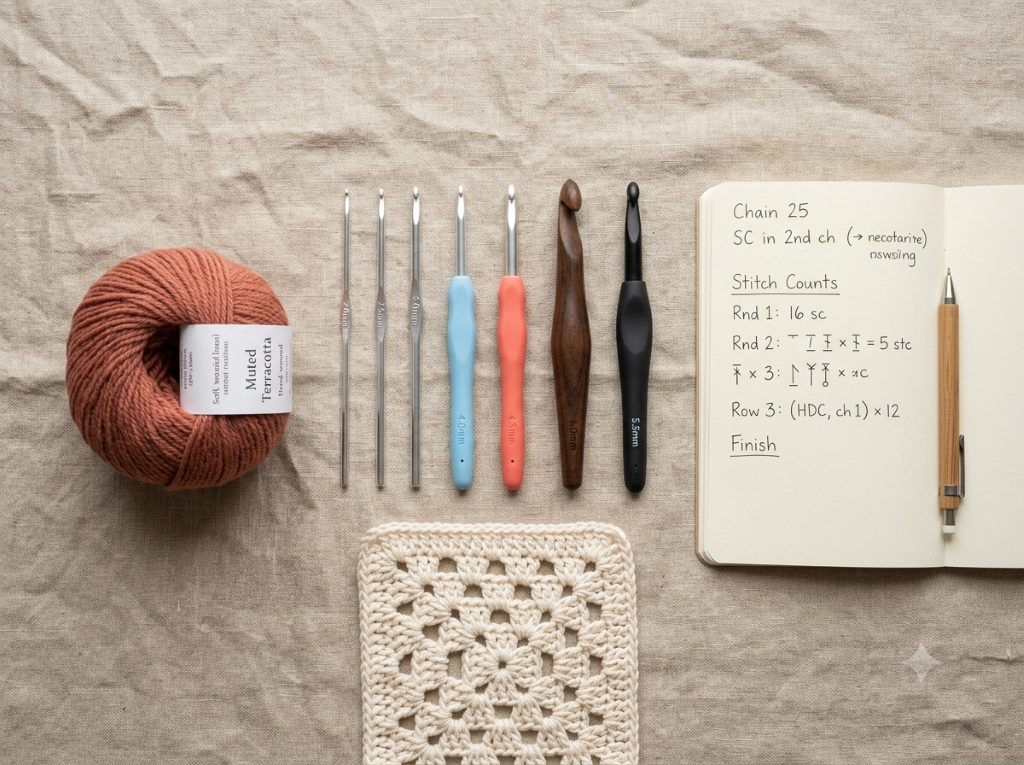
Crochet Hook Handle Types: Which One Should You Choose?
Walk into a craft shop or browse an online crochet store, and you’ll find hooks with surprisingly different handles. Some are almost entirely metal, some have soft rubberised grips, and others feature wide, sculpted shapes designed to fit the hand.
Understanding these differences makes it easier to choose a hook based on your needs rather than simply buying the one that looks most attractive.
Traditional Metal Crochet Hooks
Traditional aluminium and steel hooks have a slim, straightforward design. They are lightweight, easy to store and familiar to many crocheters. If you prefer holding your hook like a pencil and enjoy moving it freely between your fingers, a traditional hook may feel completely natural.
These hooks are also practical if you carry your crochet projects everywhere. They take up little room in a project bag, and you can usually find them in a wide range of sizes.
The possible drawback is the narrow handle. If you tend to pinch the hook tightly or find small objects difficult to hold comfortably, a slim metal hook may not be your favourite choice for longer sessions.
That doesn’t make traditional hooks inferior. If your current hook feels good and lets you crochet comfortably, there’s no reason to replace it simply because another style is trending.
Soft-Grip Crochet Hooks
Soft-grip hooks have a cushioned or rubberised section around the handle. Their purpose is to provide a different surface to hold, which some crocheters find more comfortable than smooth metal.
I would consider this style if your hook tends to slip between your fingers or if you want something that feels a little less narrow without moving to a very bulky design.
However, soft-grip handles vary considerably. One may feel pleasantly secure, while another may seem sticky, too thick or awkwardly shaped. The material and overall balance of the hook can change the experience.
This is why trying a single hook before investing in a complete set can be a sensible approach.
Ergonomic Crochet Hooks
Ergonomic crochet hooks generally have wider or contoured handles designed to support a more comfortable hold. Some have soft cushioning, while others use firm materials shaped to fit the fingers.
They can be particularly appealing if you find narrow handles uncomfortable or want to experiment with a different way of holding your hook. However, the word ergonomic doesn’t mean that every design will suit every hand.
A wide handle may feel supportive to one crocheter but restrictive to another. The best option depends on your hand size, grip style, preferred movements and the type of project you’re making.
If you’re considering a more specialised hook, you can read AvyaStore’s Tulip Etimo Rose crochet hook review for a closer look at a popular cushioned-handle design.
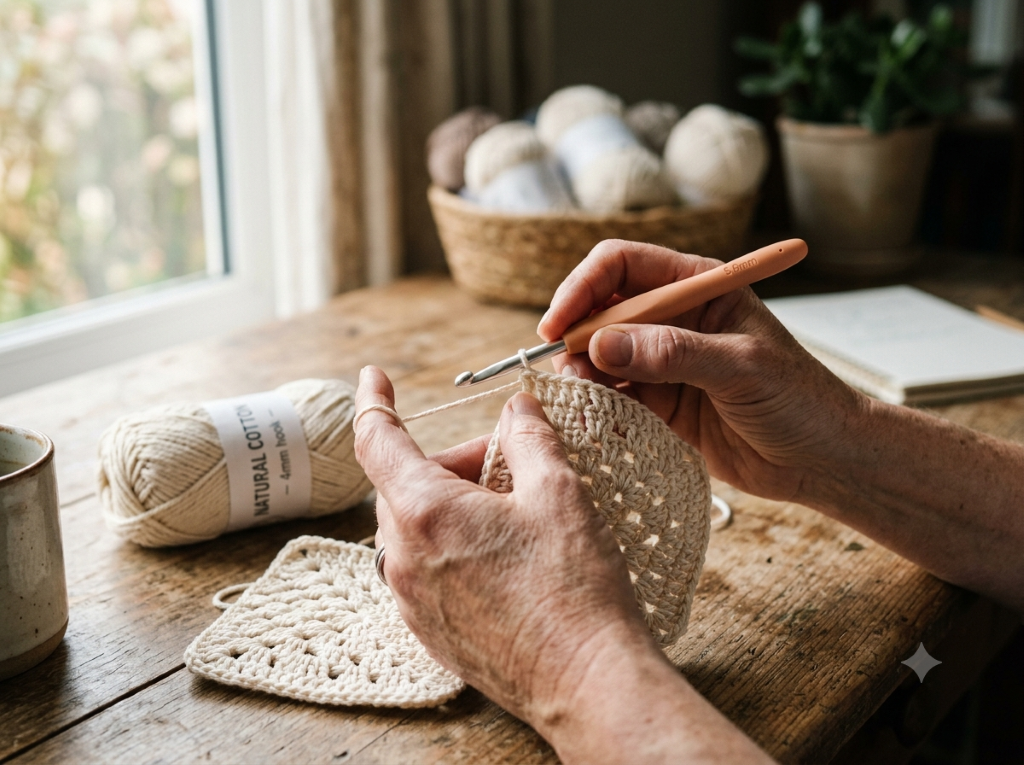
Does Your Crochet Grip Change Which Handle Works Best?
Yes, your natural grip is worth considering when choosing a crochet hook handle. Most crocheters use either a pencil grip or a knife grip, although many develop their own variation over time.
With a pencil grip, you hold the hook much like a writing pencil, controlling it mainly through your fingers. A slim or moderately sized handle may feel comfortable because it allows those small movements. A bulky handle can still work, but you may need time to adjust to its shape.
With a knife grip, you hold the hook more like a knife, often using broader movements of your hand and wrist. Some crocheters who use this grip enjoy a thicker handle because it provides a larger surface to hold. Others prefer a lightweight metal hook that moves easily.
Neither grip is automatically better, and you don’t need to change a comfortable, familiar technique just to use a particular hook.
If you’d like to understand hook parts and holding styles in greater detail, read AvyaStore’s A–Z guide to crochet hooks. It complements this article by exploring the hook itself and how different features relate to the way you crochet.
How to Choose the Right Crochet Hook Handle for You
Before spending money on a new hook set, pay attention to what happens when you use the hooks you already own. Does the handle feel too narrow? Do your fingers keep slipping? Does the hook feel heavy or unbalanced after a while? Or are you simply curious about trying something different?
These observations are more useful than choosing a hook because it has the highest price or the most enthusiastic reviews.
Think about your usual projects, too. A hook that feels comfortable when making a large, relaxed crochet swatch may feel different when you’re working on tiny amigurumi details. You might even prefer different handle styles for different types of crochet.
The hook head deserves attention alongside the handle. It should work well with your yarn, catch the strand smoothly and allow you to pull loops through without unnecessary snagging. A comfortable handle won’t compensate for a hook head that doesn’t suit your yarn or technique.
One practical approach is to take a hook you already use regularly and crochet a small swatch. Notice how you hold it, whether your fingers feel relaxed and whether you keep adjusting your grip. Then try another handle style using the same yarn and stitch pattern. Comparing the two this way helps you focus on the handle rather than confusing the results with changes in yarn or hook size.
You may discover that your existing hook is perfectly comfortable. That’s useful information, too.
Are Expensive Ergonomic Crochet Hooks Worth the Money?
They can be worth the investment if their shape and grip make crocheting more comfortable for you. But a higher price doesn’t guarantee a better experience, and a budget-friendly hook isn’t automatically a poor choice.
If you’re a beginner, there’s no need to buy an expensive ergonomic set before you know what you like. Start with a suitable hook, practise your stitches and pay attention to how the handle feels as you gain experience.
If you’ve been crocheting for years and find your current hooks uncomfortable, trying one alternative may be worthwhile. You can compare the handle thickness, material, weight and ease of movement before deciding whether to buy more.
A product review can help you understand a hook’s features, but your own experience is what ultimately matters. Someone else’s favourite hook may not be the right fit for your hands.
Final Thoughts: Does the Crochet Hook Handle Really Matter?
Yes, the crochet hook handle really does matter, but not in the same way for every crocheter. It can influence comfort, grip and how easily you control your hook, particularly during longer projects. However, it works alongside other factors, including hook size, yarn choice, tension and technique.
I wouldn’t replace a comfortable metal hook simply because ergonomic designs are popular. Equally, I wouldn’t ignore a handle that consistently feels awkward when there are other options to explore.
Pay attention to your hands, experiment with different designs if necessary, and choose a hook that feels natural rather than forcing yourself to adapt to something that doesn’t suit you.
After all, the best crochet hook is the one that lets you focus on the project in front of you instead of constantly thinking about the tool in your hand.
What about you? Do you prefer traditional metal hooks, soft-grip handles or ergonomic crochet hooks? I’d love to hear which style you enjoy using and what makes it work for you.
About AvyaStore
At AvyaStore, we share practical crochet guides, tool reviews and creative ideas to help crocheters make informed choices and enjoy their craft. Whether you’re just starting out or have years of experience, understanding your tools can help you find an approach that works for you.
© AvyaStore. All rights reserved.


Be the first to comment