
Meet the people and places behind India’s handmade crochet lace, from the crochet-making communities of Narsapur to the delicate lace traditions of Daman and Diu.
Indian Crochet Traditions: More Than a Handmade Hobby
When I think about crochet, I usually picture a ball of yarn, a hook and the satisfaction of watching a few simple stitches grow into something useful. But crochet has another side that deserves attention: the people who have turned this skill into a livelihood and kept regional craft traditions alive through generations.
Indian crochet traditions have a fascinating story, particularly in places where handmade lace became part of everyday working life. In some communities, crochet developed into a specialised craft used to make table linens, bedspreads, decorative covers and garments. These pieces were not simply weekend projects. They required patience, consistent technique and the ability to produce detailed work by hand.
India’s crochet heritage is not identical everywhere. Narsapur in Andhra Pradesh, Jamnagar in Gujarat, and Daman and Diu have different craft histories and practices. Exploring them helps us understand crochet as more than a technique. It is also part of a larger story about women’s work, household skills, changing markets and the value of handmade objects.
As crocheters, we can learn a great deal from these communities, especially when we look closely at how they use thread, join motifs and create intricate lace.
Narsapur: The Heart of India’s Crochet Lace Heritage
How crochet lace became part of local life
When discussing India’s crochet history, Narsapur, in the Godavari region of Andhra Pradesh, is an important place to begin. The area developed a recognised tradition of fine, handmade crochet lace during the nineteenth century. Historical accounts connect its growth with Christian missionary activity, through which local women were taught lace-making as a way to supplement household income.
Over time, the craft grew beyond a domestic skill. Women in Narsapur and surrounding villages became known for producing detailed lace pieces, and the work developed links with wider markets, including overseas buyers.
I find this history particularly interesting because it shows how a small tool and a simple thread can become the foundation of a much larger community craft. What might begin as a skill learned at home can eventually support families and create a regional identity.
What makes Narsapur crochet distinctive?
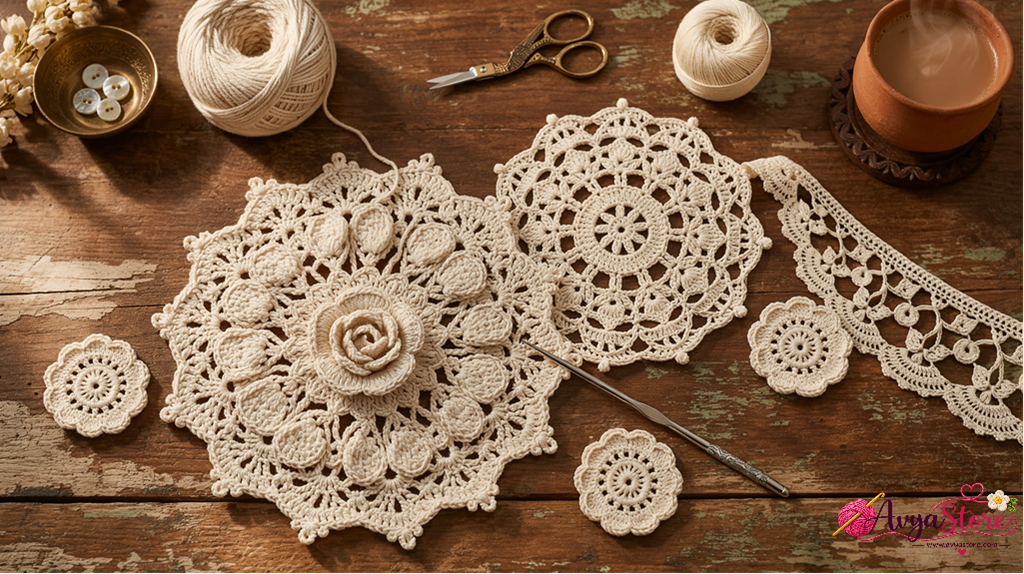
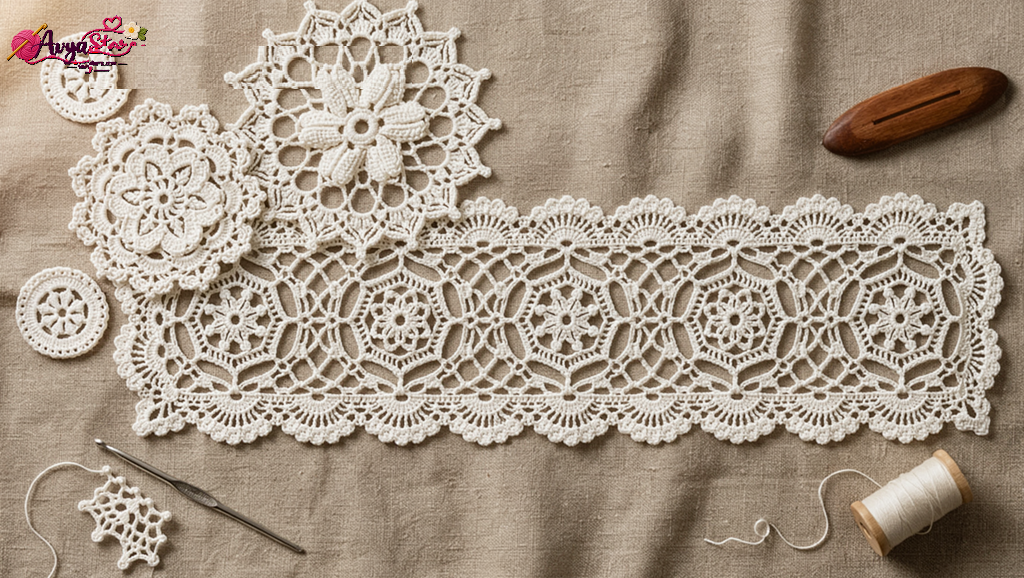
Narsapur artisans work with fine threads and small crochet hooks to produce intricate patterns. Their work includes doilies, table runners, bedspreads, pillow covers and other decorative textiles. Some products also extend into clothing and accessories.
The designs can be delicate and open, with individual motifs carefully joined to create larger pieces. This takes more than knowing how to make a chain or a double crochet stitch. The maker needs to maintain consistent tension, follow a pattern and ensure that the finished lace holds its intended shape.
For anyone who crochets, these details are worth appreciating. Fine lace makes uneven tension particularly visible, and joining separate motifs neatly requires care. The finished object may look light and effortless, but the work behind it is anything but careless.
Why the GI tag matters
Narsapur crochet lace received Geographical Indication registration in 2024. A GI tag identifies products associated with a particular geographical origin and established qualities or reputation. In this case, it helps recognise the identity of the regional crochet lace craft.
The recognition matters because handmade artisans face competition from machine-made alternatives and changing customer demand. Protecting a regional name can support authenticity and help bring greater attention to the people who make the products.
For me, this is an important part of the story. When we buy handmade lace, we are not only choosing a decorative object. We may also be supporting a skilled maker and a craft community with a long history.
Jamnagar: Another Chapter in Indian Crochet Heritage
Jamnagar, in Gujarat, is also associated with India’s crochet and lace-making history. Craft documentation identifies it as an older centre of crochet work, with historical accounts connecting the tradition to an earlier period of regional craft activity.
This is a useful reminder that India’s crochet heritage is not confined to one town or one style of lace. Different regions developed their own practices, and the history of each needs to be understood on its own terms.
When we look at regional crochet, the details that interest me most are the choices a maker must make: how fine the thread should be, how closely the motifs sit together, how the design repeats and how the finished fabric will be used.
A lace piece intended for a tablecloth needs to behave differently from one used as a clothing trim. The maker must think about drape, durability, the weight of the thread and the purpose of the finished item.
These considerations remain relevant to modern crocheters, whether we are making a delicate edging or a larger decorative piece.
Daman and Diu: Crochet, Lace and Household Craft
Daman and Diu have documented traditions of crochet, lace and embroidery associated with domestic craft skills. Historical craft documentation describes women learning these techniques within families and communities, with some skills also taught in schools.
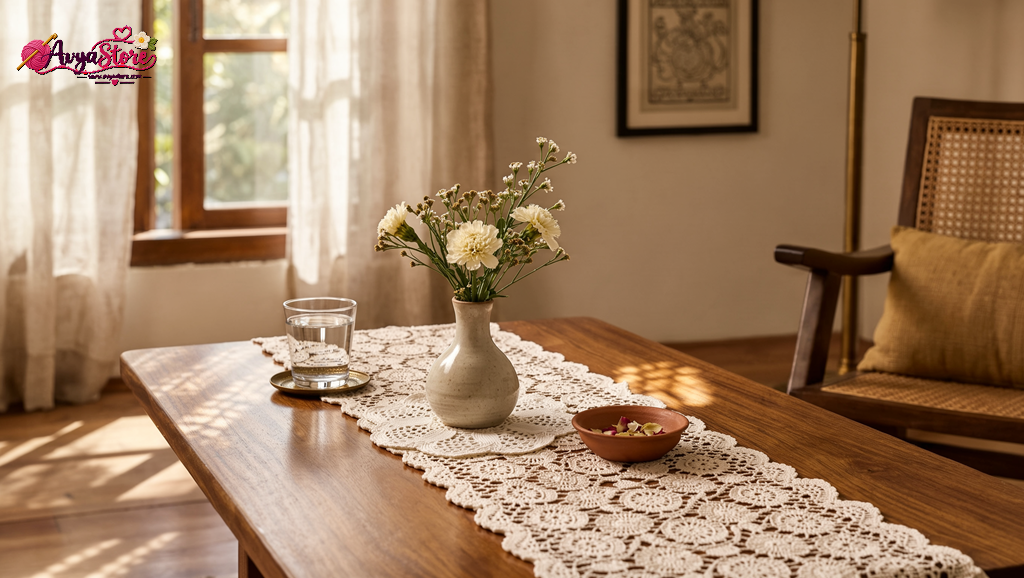
The work includes household textiles such as bed linen, table linen, doilies and decorative covers. Floral designs and soft colours feature in descriptions of some of these traditions.
What stands out to me is the relationship between craft and everyday life. Lace was not always made to be displayed in a gallery or kept as a special occasion piece. It could be part of a household’s everyday surroundings, adding detail to objects that were used regularly.
This is a lovely idea to carry into modern crochet. A handmade table runner, a small lace mat or a decorative edge on a cushion can bring that same attention to detail into an ordinary room.
It is important, however, to recognise that crochet, embroidery and cutwork are distinct techniques, even when they appear together in the same textile tradition.
What Modern Crocheters Can Learn From These Traditions
You do not need to live in a traditional crochet-making centre to appreciate its techniques. There are practical lessons here for anyone who enjoys working with yarn.
Learn to appreciate fine thread and tension
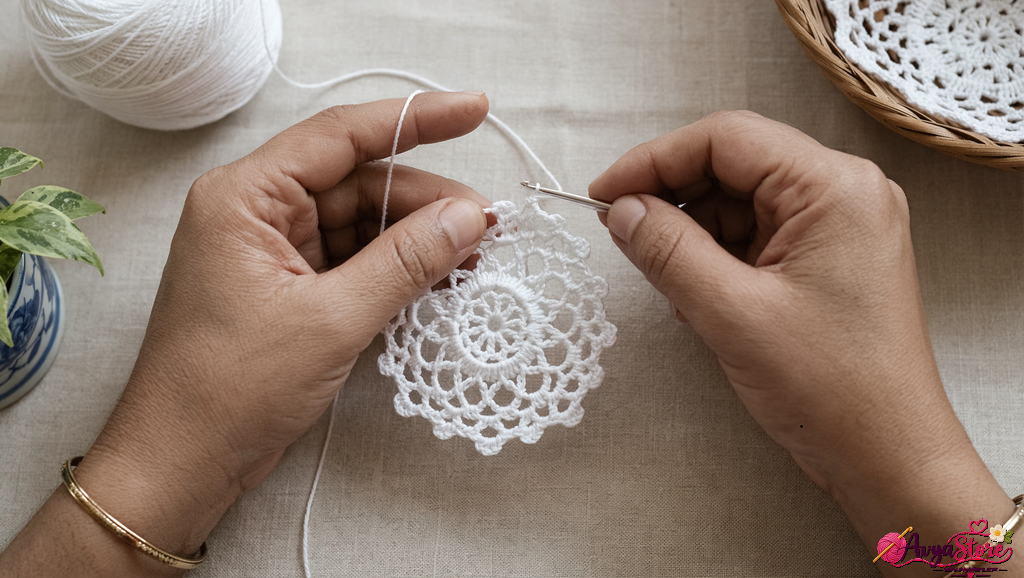
Fine crochet lace requires control. If your stitches are too tight, the fabric may become stiff; if they are too loose, the pattern may lose its definition.
Try practising with cotton thread and a suitable hook before starting a large lace project. Make a small sample, check that the stitches are even, and block the piece if the yarn and pattern allow it. This will help you see how the lace opens up and whether the finished shape matches your expectations.
Look closely at motif construction
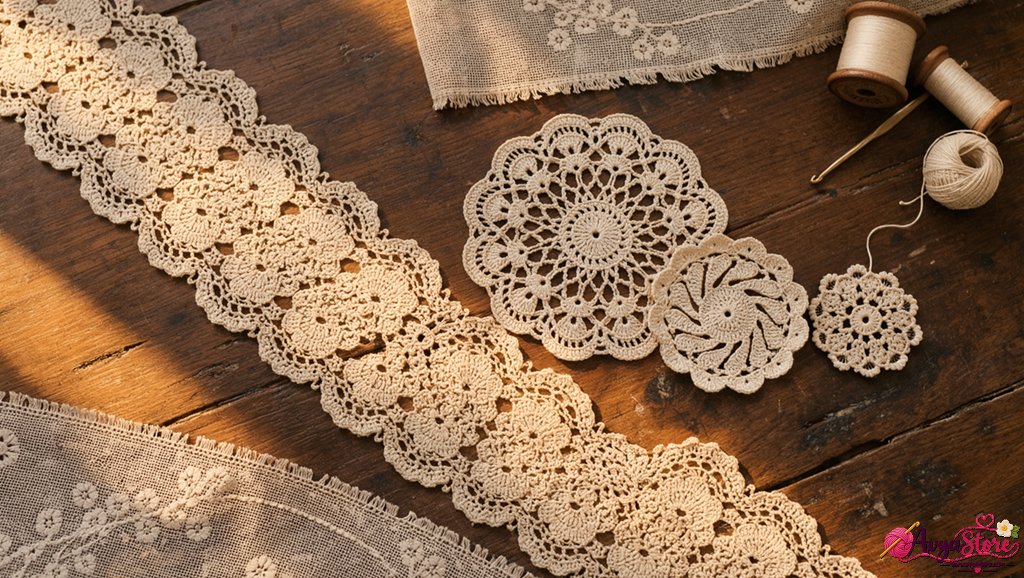
Many lace designs use repeated elements to build a larger pattern. A flower, a circle or a small geometric shape can be made separately and joined to others.
If you enjoy motif-based crochet, try making several identical pieces first. Focus on keeping them the same size, then practise joining them neatly. This is a useful way to develop the consistency required for larger projects such as runners, covers and decorative panels.
Think about the purpose of the finished object
Traditional lace-making demonstrates how a technique can be adapted to a particular use. A table runner needs a different structure from a wearable stole, and a cushion cover needs enough strength to withstand regular handling.
Before choosing a pattern, consider where the item will be used, how often it will need washing and whether a delicate openwork design is suitable. Cotton yarn can be a practical choice for many household projects, but the best yarn depends on the intended use and care requirements.
These small decisions help turn a pretty crochet pattern into a finished piece that works well in real life.
Supporting the People Behind Handmade Crochet
The history of a craft is only part of its story. Its future depends on whether makers can continue practising their skills and earn a fair return for their work.
When purchasing handmade crochet, take a moment to ask where the piece was made, who made it and whether its regional origin is documented. If a seller identifies a product as traditional Narsapur crochet lace, for example, look for credible information about its source rather than relying on a label alone.
You can also support artisans by sharing their work with proper credit, buying directly from credible artisan organisations when possible, and learning about the craft before using its name in your own descriptions.
If you are a crochet designer, it is perfectly reasonable to draw inspiration from traditional lace techniques. Just be clear about the difference between a modern design inspired by a regional craft and a piece actually made by artisans practising that tradition.
That distinction respects both the original makers and the people who are discovering their work for the first time.
Indian Crochet Traditions: Keeping the Story Alive
What makes Indian crochet traditions worth exploring is the connection between a practical skill and the people who have carried it forward. Narsapur’s crochet lace, Jamnagar’s documented craft history and the lace traditions of Daman and Diu show that crochet in India has several regional stories, not just one.
For today’s crocheters, these traditions offer more than design ideas. They encourage us to pay attention to thread, tension, construction and the purpose of the finished object. They also remind us that behind every intricate handmade piece is time, practice and a person who knows how to work the material.
The next time you pick up your hook, consider looking beyond the pattern itself. Learn about a regional craft, explore the story behind a lace-making community, or try a small project that teaches you a traditional technique.
Crochet becomes even more rewarding when we understand not only how something is made, but also the people and places that helped make the craft what it is today.
Be the first to comment