
For my first two years of crocheting, I thought a hook was just a hook. Pick one in the right size, start stitching, done. Then a friend handed me hers to try, and my stitches suddenly looked different. Same yarn, same pattern, same hands. Different hook.
That little moment sent me down a rabbit hole, and I’ve been poking at it ever since. So let’s talk about inline vs tapered crochet hooks, what actually separates them, and whether it matters for the things you make.
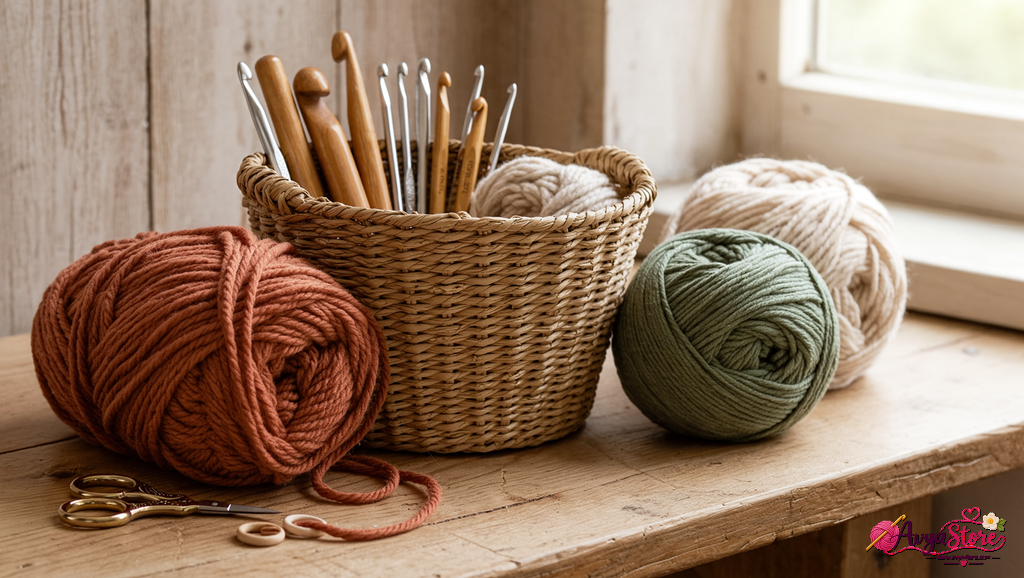
What Is the Difference Between Inline and Tapered Crochet Hooks?
Look closely at the top of your hook. That small area, the head and the throat, is where everything happens.
The inline hook
On an inline hook, the head and the throat are cut straight into the shaft, so the whole thing is one even diameter from the tip down to the thumb rest. The throat is flat and sharp-edged, almost like a little notch. Susan Bates hooks are the one most people point to as an example.
The tapered hook
A tapered hook has a rounded, smoother head, and the throat is shaped so the hook narrows gently into it. The head often looks like a soft little bulb. Boye hooks are the classic example. Many other brands, including some ergonomic ones, follow this rounded style too.
Neither is better. They’re just built differently, and that build shows up in your fabric.
How Inline vs Tapered Crochet Hooks Change Your Stitches
Here’s the part I really wanted to know when I started: will my work look different?
Yes, a little. Sometimes more than a little.
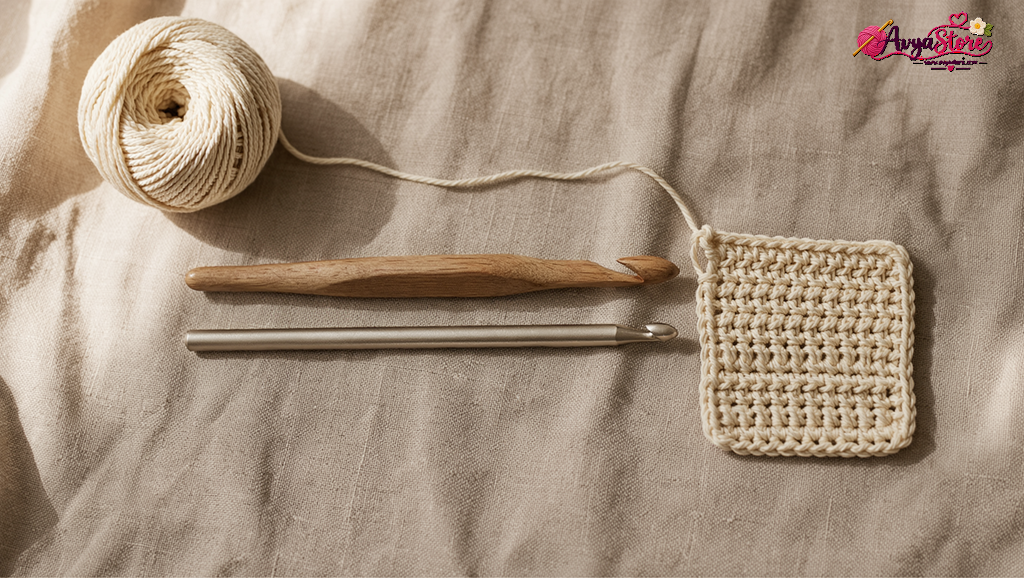
Tension and stitch size
The size on the hook is the diameter of the shaft. On an inline hook, your loop sits on that shaft, so what you measure is what you get. On a tapered hook, the throat is slightly narrower than the shaft, so the loop can settle in a bit tighter or looser depending on where your hand holds it.
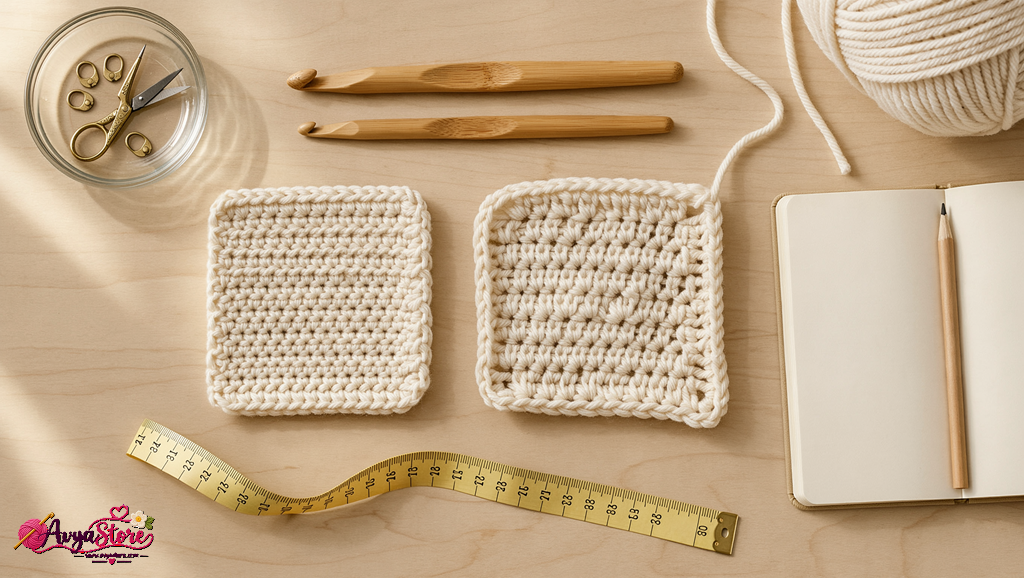
In my own swatches, the inline hook gave me firmer, more even stitches. The tapered hook gave me a slightly looser, drapier fabric. If you’ve ever followed a pattern perfectly and still ended up with the wrong gauge, your hook style might be part of the story.
Speed and catching the yarn
The sharper throat on an inline hook grabs yarn firmly. For me, that means a quick, confident pull-through, which is great for single crochet or amigurumi. The tapered hook glides. It slips into stitches easily and lets the loop slide off the head without a fight, and that smoothness is lovely with chunky yarn.
But there’s a trade-off. A tapered hook can feel a bit less secure when you’re working fast, and an inline hook can feel snaggy when the yarn is slippery or the stitches are tight.
Splitting your yarn
This one drives people mad. Inline hooks, especially those with pointed heads, can catch the strands of a plied yarn and split them. If you’ve ever ended up with a stray thread poking out of a stitch, you know the frustration. A rounded tapered head tends to be kinder to loosely spun or fuzzy yarn.
Which Hook Suits Which Yarn and Project?
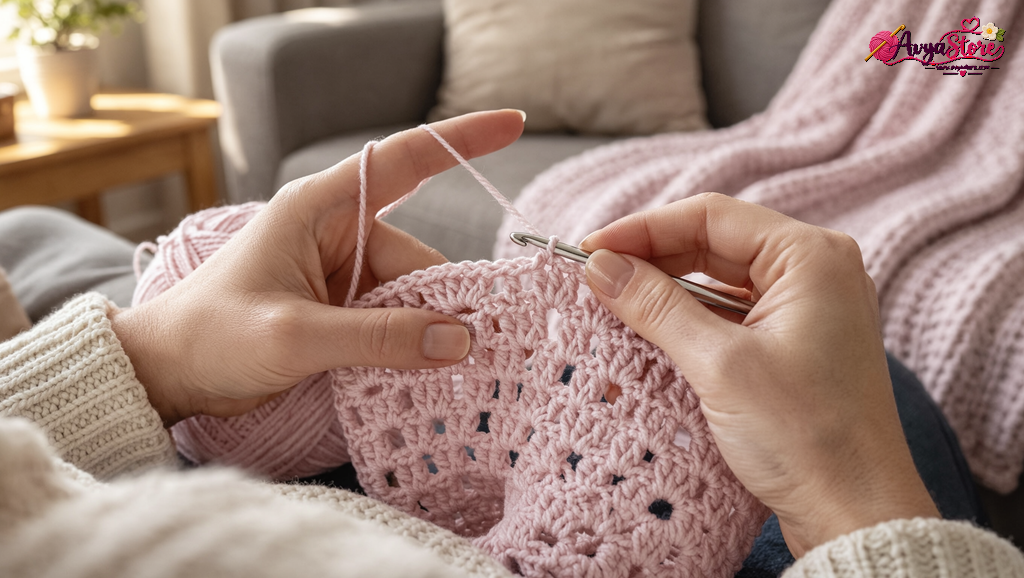
Here’s how I decide when I sit down with a new project.
- Amigurumi and tight stitches: I reach for an inline hook. The firm grip and neat, tight fabric keep the stuffing from peeking through.
- Blankets and wearables: Tapered hooks give a softer drape, which is what I want from a shawl or a baby blanket.
- Cotton and other non-stretchy yarn: Inline can feel precise here, but a tapered hook is easier on the hands because it slides more.
- Fuzzy, mohair or loosely plied yarn: Go tapered. Fewer split strands, less swearing.
- Slippery yarns like bamboo or silk blends: An inline hook’s sharper throat holds on better.
These are my habits, not rules. Your hands may disagree, and that’s fine.
Hand Comfort and the Inline vs Tapered Crochet Hooks Debate
Comfort matters more than anyone admits. A hook that fights you will tire your hand long before the project is done.
Tapered hooks often feel smoother when the yarn rolls over the head, so some crocheters find them gentler on the wrists. Inline hooks can feel a little more demanding because of that firm grip on the yarn. That said, handle shape, thickness and material matter just as much as the head style. If you haven’t read it yet, my post on whether the crochet hook handle really matters goes deeper on that side of things.
If your hands ache, don’t blame yourself first. Try a different hook.
How to Test Both Hooks Yourself
You don’t need to buy a full set. Here’s what I’d do.
- Pick one yarn you know well, ideally a smooth worsted weight.
- Choose the same size in one inline hook and one tapered hook.
- Crochet a small swatch, about 20 stitches wide, with each hook.
- Measure both. Check the width, the drape and how the stitches look.
- Notice how your hand feels after ten minutes with each one.
That last step tells you more than any chart. Keep notes in your project journal so you remember what worked.
So, Which One Should You Pick?
After all this stitching, my honest answer is that I keep both in my basket. When I’m making something firm and structured, I pick up an inline hook. When I want soft, flowing fabric or I’m working with temperamental yarn, I switch to tapered.
So does the difference between inline vs tapered crochet hooks change your crochet? It can change your tension, your speed, your comfort and even how your yarn behaves. It won’t make or break a project, but it might explain why your last one came out a little different from the pattern photo.
Grab one of each, make a quick swatch, and see how your own hands feel about it. I’d love to hear which one wins in your basket, so tell me in the comments.
SEO and Publishing Package
SEO title (H1): Inline vs Tapered Crochet Hooks: Does It Change Your Crochet?
Suggested URL slug: inline-vs-tapered-crochet-hooks
Focus keyword: inline vs tapered crochet hooks
Secondary keywords: inline crochet hook, tapered crochet hook, best crochet hook for beginners, crochet hook types, crochet hook head shape, crochet tension and gauge, crochet hook for amigurumi, crochet hooks for splitting yarn
Meta description: Inline vs tapered crochet hooks: how the head shape changes your stitches, speed and comfort, plus which one to pick for your favourite yarn.
WordPress category: Crochet Tools and Tips
WordPress tags: inline crochet hook, tapered crochet hook, inline vs tapered crochet hooks, crochet hook types, crochet hooks guide, crochet for beginners, crochet tips, crochet tension, crochet gauge, crochet hook comparison, amigurumi hooks, best crochet hook, crochet tools, yarn splitting, handmade crochet, Avyastore
Internal link ideas: the crochet hook handle post (“Does the Crochet Hook Handle Really Matter?”) and the post on reading crochet charts.
Featured image alt text: An inline crochet hook and a tapered crochet hook lying side by side on a linen cloth with a ball of cream yarn.
Canva Image Prompts (natural-looking)
Use these in Canva’s AI image generator (Magic Media), choosing the Photo style. Add “no text, no watermark” if the tool adds any. Skip people’s faces and keep hands natural if you include them.
1. Featured image (blog header, 1200 x 628 px) “Natural top-down photograph of two crochet hooks, one with a flat inline head and one with a rounded tapered head, resting side by side on a soft beige linen cloth, with a small ball of cream cotton yarn and a tiny swatch beside them, soft window light from the left, gentle shadows, shallow depth of field, cosy handmade feel, realistic, no text.”
2. Close-up of the hook heads (shows the difference) “Macro photograph of two crochet hook heads side by side, one inline with a sharp cut throat and one tapered with a smooth rounded head, shot on a plain wooden table, warm natural daylight, crisp focus on the metal, slightly blurred yarn in the background, realistic, no text.”
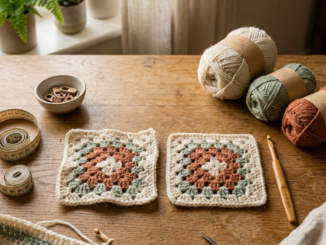
3. Swatch comparison “Overhead natural photo of two small crochet swatches in the same cream worsted yarn, the left slightly tighter and the right slightly looser and drapier, laid on a light wooden surface next to a measuring tape and a notebook, soft morning light, authentic handmade look, no text.”
4. Hands at work (no face) “Candid close-up of a woman’s hands crocheting with a pastel pink yarn and a silver hook, cosy sofa and knitted throw blurred in the background, warm afternoon light, natural skin tones, relaxed posture, realistic photography, no face visible, no text.”
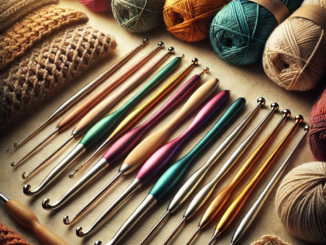
5. Basket of hooks “Natural lifestyle photo of a woven basket holding crochet hooks in different sizes, balls of yarn in muted terracotta, sage and cream, placed on a wooden shelf near a window, soft daylight, slightly imperfect arrangement, realistic, no text.”

Be the first to comment