
There is something slightly heartbreaking about finishing a crochet project, admiring your neat stitches, and then discovering a few days later that it has somehow… changed shape.
Your square is now a rectangle. Your basket has started looking floppy. Your beautiful crochet bag seems to have grown overnight.
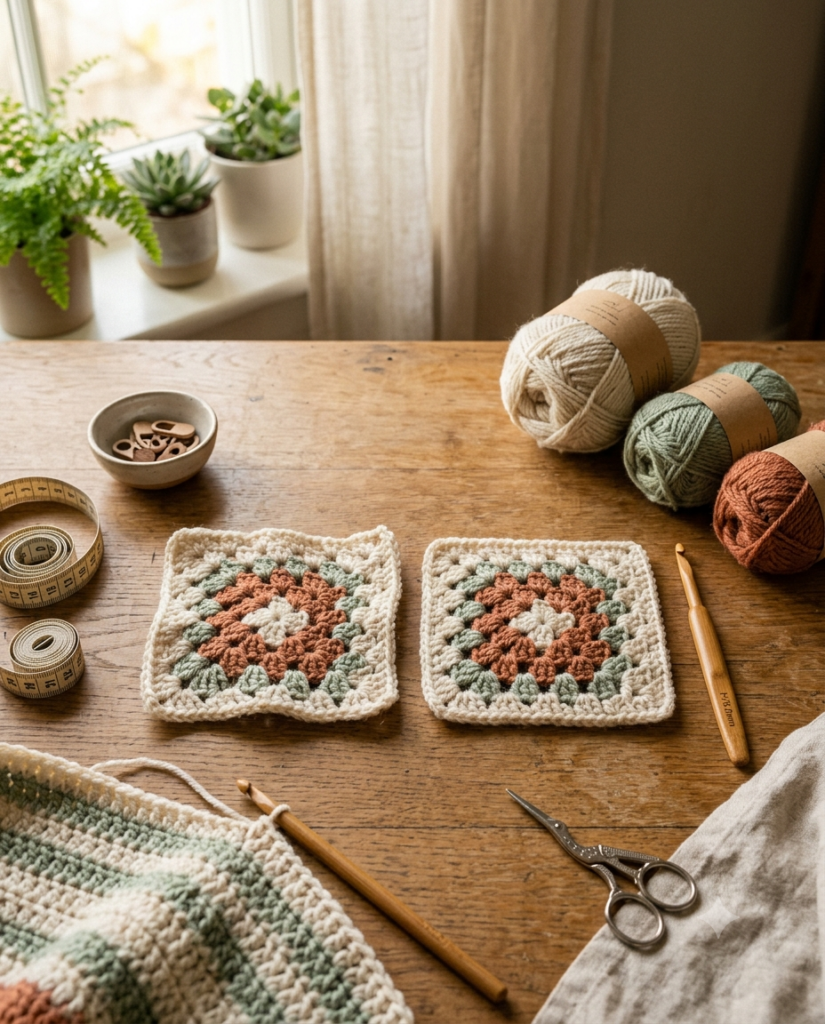
If you’ve ever wondered how to stop crochet from stretching out of shape, you’re definitely not alone. I have had projects that looked perfectly behaved while I was making them, only to stretch once they were used, washed, or simply left hanging.
The good news? Crochet stretching is usually fixable, and more importantly, it can often be prevented.
Let’s look at why it happens and what you can do about it.
Why Does Crochet Stretch Out of Shape?
Crochet naturally has some flexibility. That’s one of the things we love about it.
But certain combinations of yarn, stitch pattern, tension, and usage can make a project stretch much more than expected.
The most common reasons are:
- A yarn with a lot of natural or synthetic stretch
- Very loose crochet tension
- Heavy projects pulling against their own weight
- Open or lacy stitch patterns
- Incorrect washing or drying
- Hanging rather than storing flat
- Using a stitch that isn’t suitable for the project’s purpose
For example, a lightweight shawl can handle some drape beautifully. A crochet basket? Not so much.
The trick is understanding what your project needs before you start.
How to Stop Crochet From Stretching Out of Shape
1. Choose the Right Yarn
I always think yarn choice should come before worrying about complicated techniques.
Different fibres behave very differently.
Cotton, for example, can hold a relatively firm shape, although it can also stretch under weight. Wool has natural elasticity, while acrylic can soften and relax with heat.
If you’re making something that needs structure, look for yarn that provides enough body for the project.
For structured items, consider:
- Cotton or cotton blends
- Firm acrylic yarns
- Cord or heavier yarn for baskets
- Yarn specifically designed for bags or home décor
For garments, some stretch can actually be desirable.
The important thing is matching the yarn to the job.
2. Check Your Crochet Tension
Your tension can make a surprisingly big difference.
If your stitches are very loose, the finished fabric will generally have more room to move and stretch.
Try making a small swatch before starting your project.
Don’t just measure the number of stitches.
Give the swatch a gentle pull.
Ask yourself:
Does this fabric bounce back, or does it stay stretched?
That little test can tell you a lot.
If your fabric feels too loose, try a smaller crochet hook. If it’s extremely firm, you may need a larger hook.
3. Use Tighter Stitches for Structure
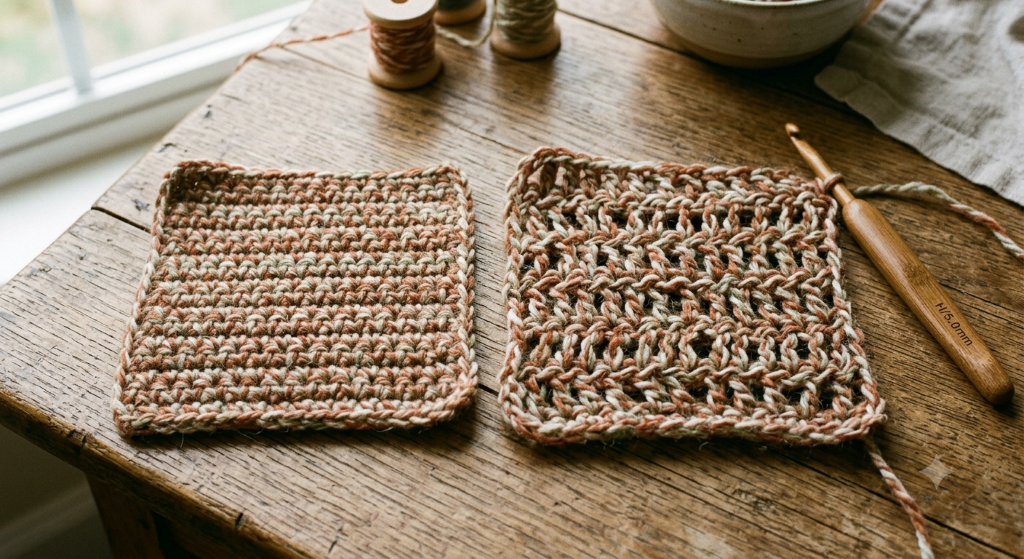
Some crochet stitches naturally create a more stable fabric than others.
If you’re making a bag, basket, coaster, placemat, or other structured item, dense stitches are often a better choice than very open designs.
Single crochet is one of my favourites when I want a firm fabric.
Half double crochet can also work nicely when you want a little more height without creating an overly open fabric.
Open lace stitches are beautiful, but they naturally have more room to stretch.
So before blaming the yarn, look at the stitch pattern too.
How to Keep Crochet From Stretching During Use
4. Don’t Let Heavy Projects Hang
This is particularly important for crochet bags, plant hangers, storage baskets, and garments.
Weight is one of crochet’s biggest enemies when it comes to maintaining shape.
Imagine putting several books inside a crochet bag and hanging it from one small handle every day. Eventually, something is going to give.
For bags and baskets:
- Avoid overloading them
- Reinforce handles where necessary
- Add a fabric lining to bags
- Use a sturdy base for baskets
- Distribute weight evenly
A little support can make a huge difference.
5. Reinforce Areas That Carry Weight
Some parts of a crochet project simply need extra help.
Handles, straps, shoulders, and bag bottoms receive much more stress than other areas.
For a crochet bag, you can sew a fabric lining inside and reinforce the handles with additional stitching or an internal support.
This doesn’t make the project any less handmade.
Quite the opposite. I think these little practical details are what turn a pretty crochet project into one you’ll actually use for years.
6. Be Careful When Washing Crochet
One of the biggest reasons for crochet stretching after washing is treating handmade pieces like ordinary machine-washable clothing.
Before washing, always check the yarn’s care instructions.
When possible:
- Use gentle washing methods.
- Avoid excessive agitation.
- Don’t wring the project.
- Press out excess water gently.
- Reshape it while damp.
- Dry it according to the yarn’s instructions.
And please don’t pick up a soaking-wet crochet blanket by one corner.
That’s basically asking gravity to do its worst.
Blocking Can Help Restore Crochet Shape
7. Learn How to Block Crochet
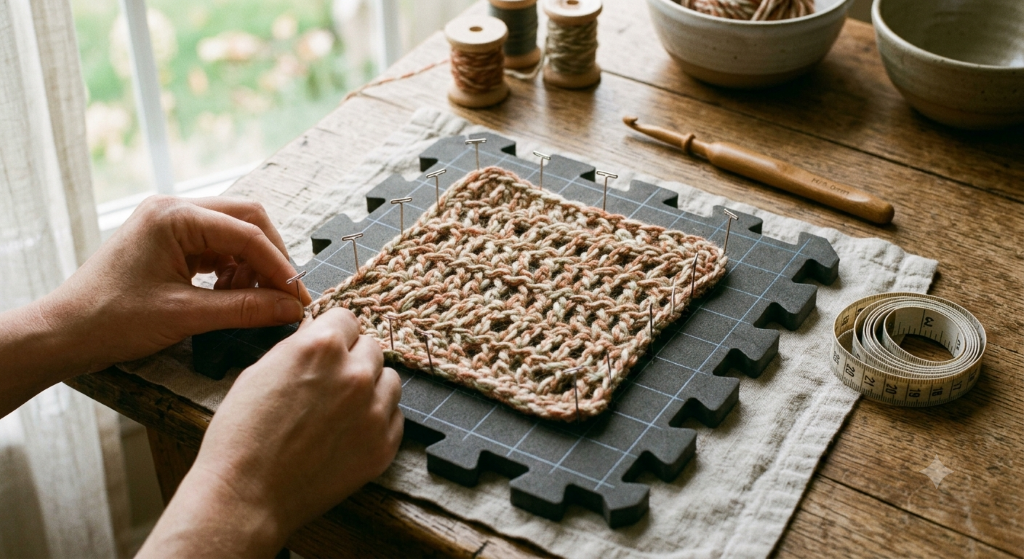
Blocking isn’t only for making crochet look pretty in photographs.
It can also help you restore the intended shape of a project.
For many projects, especially shawls, granny squares, garments, and lace designs, blocking helps even out stitches and establish a more consistent shape.
Depending on the fibre, you might use wet blocking, spray blocking, or steam blocking.
Be particularly careful with heat. Some synthetic fibres can change permanently when exposed to excessive heat.
If you’re unsure, test a small swatch first.
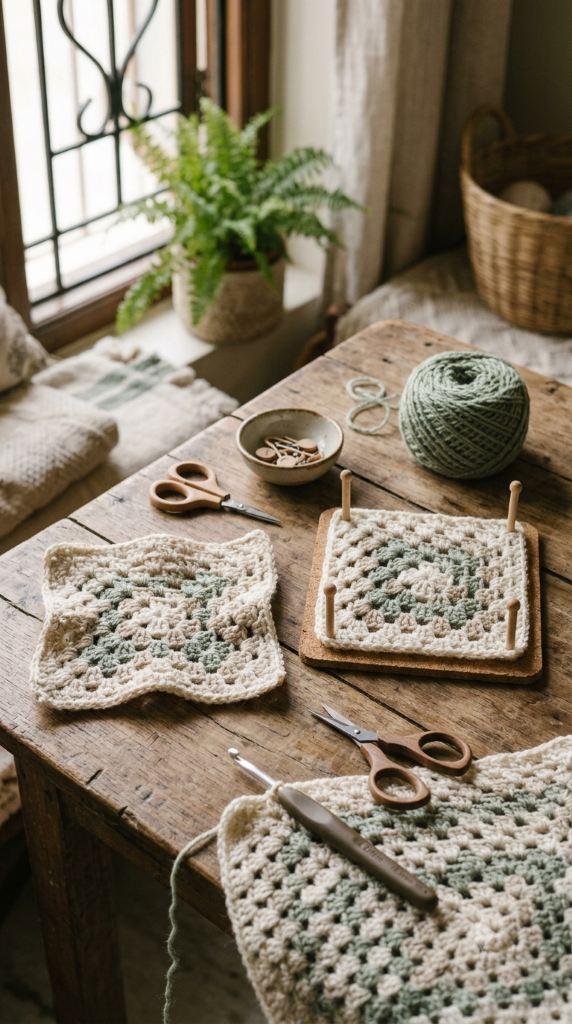
8. Reshape Crochet While It Dries
Sometimes you don’t need a complicated blocking setup.
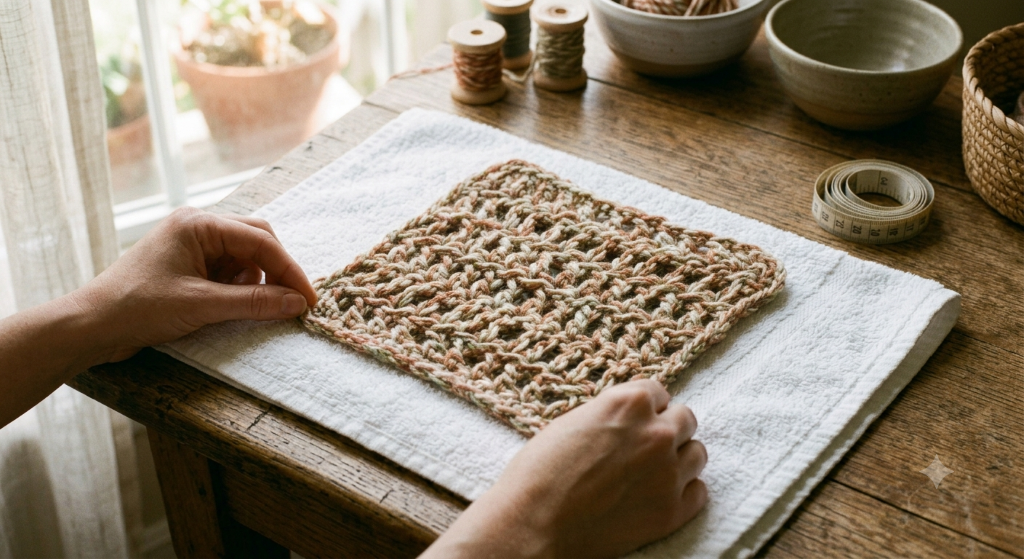
If your project has become slightly misshapen after washing, gently reshape it while damp and allow it to dry flat.
For example, if your crochet square has become rectangular, carefully ease it back toward a square shape.
Don’t pull aggressively.
Think of it as encouraging the stitches back into place rather than forcing them.
How to Prevent Crochet From Stretching Over Time
9. Store Crochet Properly
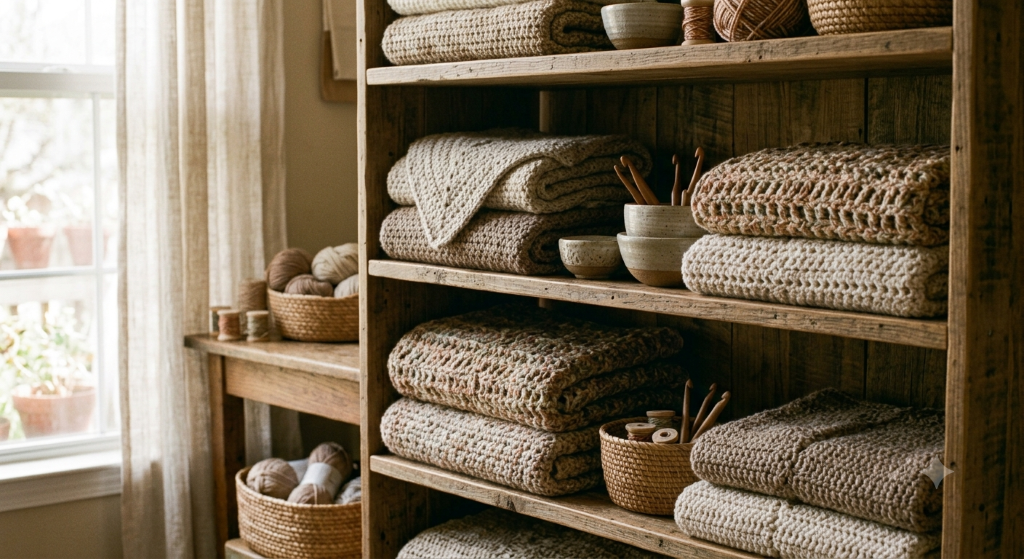
Storage matters more than we often realise.
Heavy crochet garments shouldn’t spend months hanging from a hanger because the shoulders and neckline can gradually become distorted.
For sweaters, shawls, blankets, and other heavier pieces, folding is usually a better option.
Keep finished pieces:
- Clean and completely dry
- Folded rather than stretched
- Away from excessive moisture
- Protected from unnecessary friction
- Stored without heavy objects pressing on them
And when you take something out after several months, give it a quick shape check before using it.
10. Make a Swatch Before the Main Project
I know. Swatching isn’t always exciting.
When I want to get straight to the fun part, making a little square of crochet can feel like delaying the project.
But if the finished item needs to maintain a particular shape, that small swatch can save you hours.
Test:
- Stitch tension
- Yarn behaviour
- Stretch
- Washing
- Drying
- Blocking
If the swatch stretches dramatically, you’ll know before you’ve spent hours crocheting the entire project.
That’s a pretty good trade-off.
What If Your Crochet Has Already Stretched?
Don’t immediately assume the project is ruined.
First, wash or clean it according to the yarn’s care instructions. Then gently reshape it while damp and allow it to dry flat.
For suitable fibres, blocking may help restore the shape.
However, some stretching is permanent, particularly when fibres have been repeatedly pulled, overheated, or subjected to heavy weight.
That’s why prevention is much easier than trying to repair a badly stretched project later.
My Simple Rule for Keeping Crochet in Shape
Whenever I’m starting a project, I ask myself three questions:
What will this project be used for?
Will it carry weight?
Does it need to keep a particular shape?
Those three questions usually tell me what yarn, stitch, hook size, and finishing method I should consider.
A soft, drapey yarn might be perfect for a shawl but completely wrong for a structured basket.
And a beautiful open stitch might be perfect for a summer top but frustrating for a bag that needs to hold your everyday essentials.
Final Thoughts: How to Stop Crochet From Stretching Out of Shape
Learning how to stop crochet from stretching out of shape isn’t about making every project stiff and rigid.
Crochet is supposed to have movement. Some pieces are meant to drape, stretch, and soften with use.
The goal is simply to make sure your project behaves the way you intended.
Choose the yarn carefully, pay attention to tension, use suitable stitches, support areas that carry weight, wash gently, and don’t underestimate the value of blocking and proper storage.
And if a project does stretch a little?
Don’t panic.
Sometimes your crochet isn’t misbehaving. It’s just telling you that the yarn, stitch, or construction needs a little more support next time.
That’s part of becoming a more confident crocheter—and honestly, those little lessons are often what make the next project even better.
Read Our other blogs

1 Trackback / Pingback