
Why Does My Crochet Project Curl?
You’ve finished several rows of crochet, proudly laid your project on the table—and there it is. Instead of lying flat, the edges are curling upward like they have a mind of their own.
If you’ve ever wondered, “Why does my crochet project curl?”, you’re definitely not alone. I’ve had this happen with everything from scarves and blankets to granny squares and crochet baskets.
The good news? Curling doesn’t automatically mean you’ve made a mistake.
Sometimes it’s caused by your crochet tension, stitch choice, yarn, hook size, foundation chain, or even the way the project has been stored. And in many cases, you can fix it without ripping out half your work.
Let’s look at the most common causes of crochet curling and, more importantly, what you can do about them.
1. Your Crochet Tension Is Too Tight
This is probably the first thing I check when a crochet project starts curling.
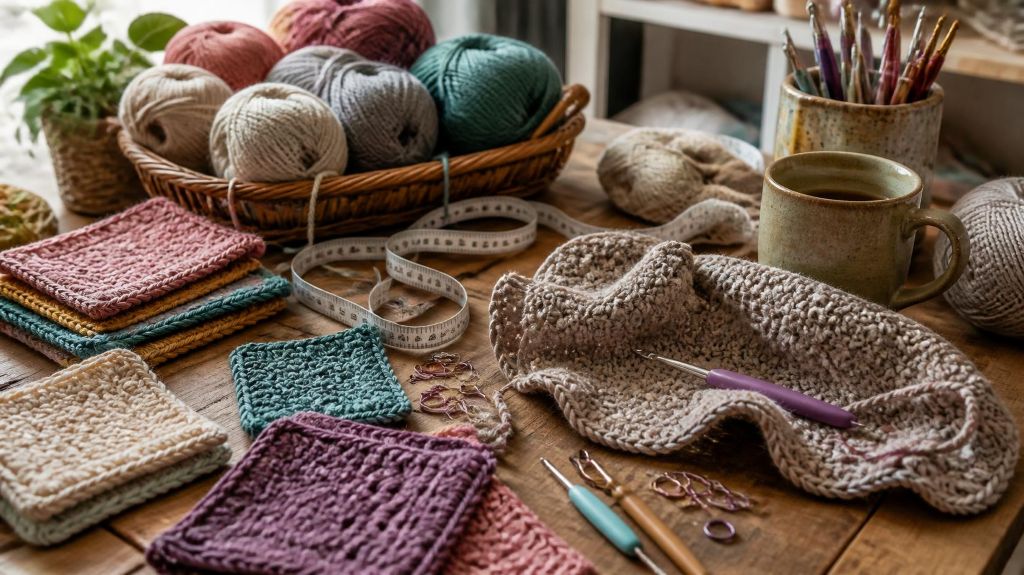
When you crochet tightly, your stitches have less room to spread naturally. This can pull the fabric inward and cause the edges or entire project to curl.
How to fix it
Try consciously relaxing your hands while crocheting. Don’t grip the hook too tightly.
You can also:
- Move up one hook size.
- Let the yarn glide more freely through your fingers.
- Practice a few rows while deliberately loosening your tension.
If your project is already finished, blocking may help considerably.
2. You’re Using the Wrong Hook Size
The yarn label usually recommends a hook size, but that doesn’t mean it will automatically produce the fabric you want.
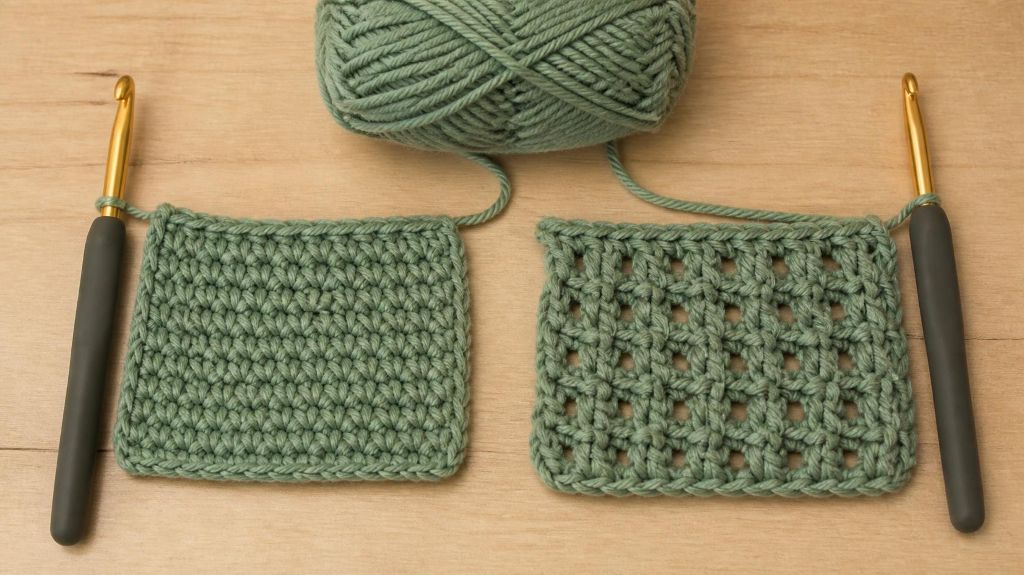
A smaller hook creates tighter, denser stitches, while a larger hook produces a looser fabric.
If you’re using a hook that’s too small for your yarn, your project may naturally curl because the stitches are packed too tightly.
How to fix it
Try making a small swatch with a larger hook. Compare it with your original work.
If the fabric immediately looks more relaxed and lies flatter, your hook size may have been the problem.
3. Your Foundation Chain Is Too Tight
This is one of the most frustrating causes of curling crochet, especially for beginners.
You may crochet the foundation chain tightly and then work normal stitches into it. The result is a first row that is much shorter than the rest of the project.
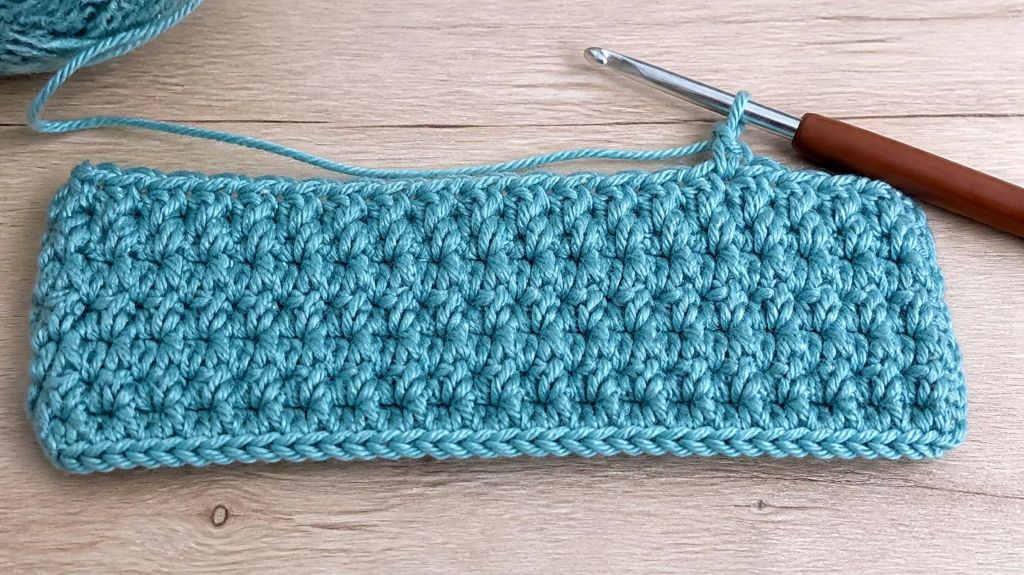
That difference creates tension—and curling.
How to fix it
Try:
- Making your foundation chain loosely.
- Using a hook one size larger just for the foundation chain.
- Using a foundation single crochet or foundation double crochet when appropriate.
I particularly like using a slightly larger hook for the starting chain when making blankets and scarves.
4. You’re Adding Too Few or Too Many Stitches
If your stitch count isn’t consistent, your crochet fabric can start behaving strangely.
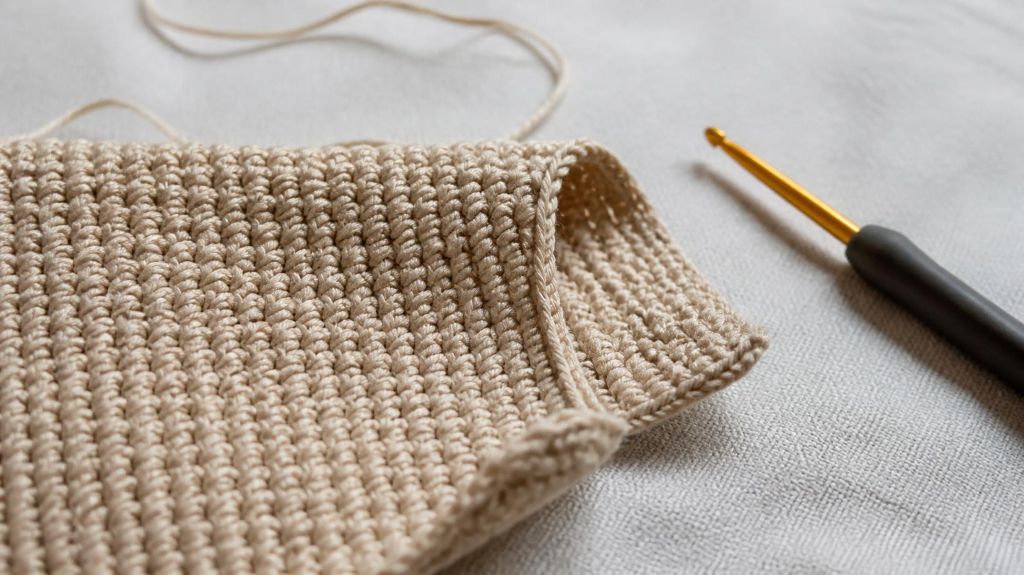
Too many stitches may make the edges ripple, while too few can pull the fabric inward and cause curling.
This is particularly common when crocheting into turning chains or accidentally skipping stitches.
How to fix it
Count your stitches regularly.
For larger projects, I like placing stitch markers at important points so I don’t have to recount every single stitch.
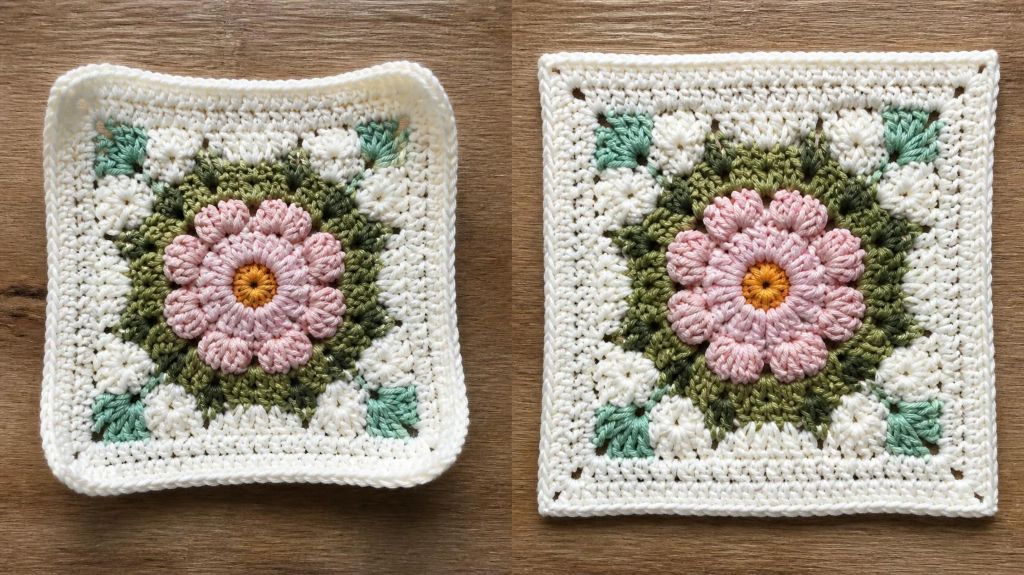
5. The Stitch Pattern Naturally Curls
Not every crochet stitch is designed to lie completely flat.
Some stitches naturally create texture, dimension, or tension that makes the fabric curl.
For example, highly textured stitches, ribbing, certain post stitches, and some decorative patterns can behave differently from simple rows of single or double crochet.
How to fix it
Check the pattern instructions before assuming something is wrong.
Sometimes the designer expects the project to be blocked or joined later. Other times, the curling is simply part of the stitch’s character.
6. Your Turning Chain Is Causing Tension
Turning chains can be surprisingly important.
If you make your turning chain very tight, it can pull the edge upward. If you make it excessively loose, you may end up with uneven edges.
How to fix it
Try keeping your turning chain relaxed and consistent.
You can also experiment with alternative turning-chain techniques if your pattern allows them.
7. You’re Changing Your Tension as You Crochet
This happens to almost everyone.
At the beginning of a project, you may crochet slowly and carefully. Twenty rows later, you’re watching television, chatting, or getting into a comfortable rhythm—and suddenly your tension has changed.
Your stitches may become tighter or looser without you realizing it.
How to fix it
Don’t aim for perfect tension. Aim for consistent tension.
If you notice your hands becoming tense, pause for a moment, relax your grip, and continue.
8. The Yarn Itself Is Causing the Curl
Different fibers behave differently.
Cotton can have less stretch than acrylic. Wool can relax beautifully with blocking. Some synthetic yarns hold their shape strongly.
Even yarn from different brands can behave differently despite having a similar weight.
How to fix it
Make a small swatch before committing to a large project.
If you’re following a pattern, use the recommended yarn weight and fiber type whenever possible.
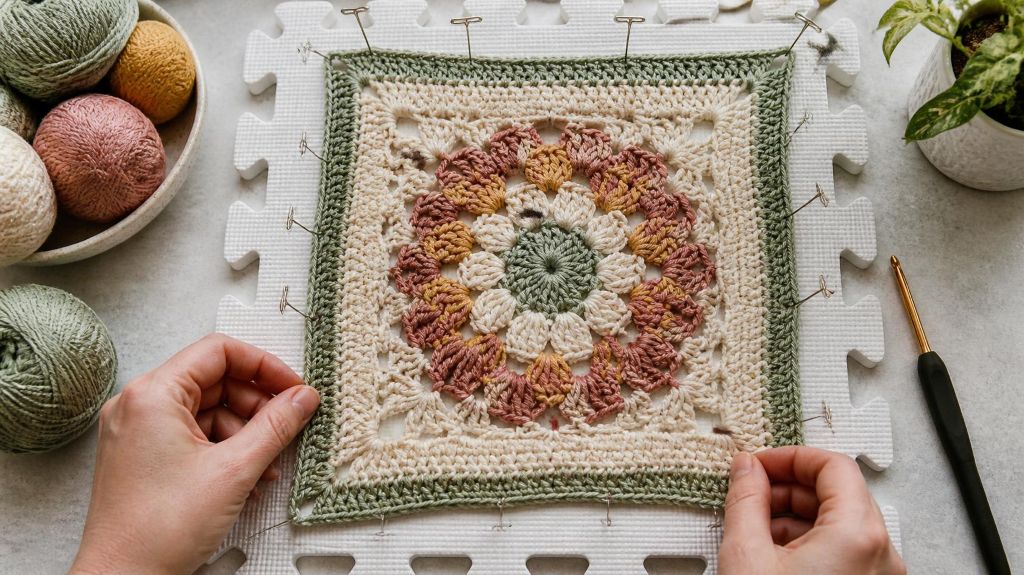
9. Your Project Needs Blocking
Sometimes your crochet is perfectly fine—it simply needs a little help finding its final shape.
Blocking is particularly useful for granny squares, shawls, blankets, lace crochet, and garments.
How to fix it
For wet blocking:
- Gently wet the finished piece.
- Remove excess water without aggressively wringing it.
- Lay it on a suitable blocking surface.
- Shape it carefully.
- Pin the edges if necessary.
- Allow it to dry completely.
Always check that your yarn is suitable for the blocking method you’re using.
10. The Project Is Still Too New
This sounds strange, but freshly crocheted fabric can sometimes look different from how it will look after relaxing.
The yarn has been under repeated tension while you’ve been working with it.
Give your project a little time. Lay it flat and gently smooth it with your hands.
Sometimes the simplest solution is simply letting the fabric relax.
11. Your Edges Need Support
Long crochet projects can curl along the edges even when the main body is relatively flat.
This can happen because the edge stitches experience different tension from the stitches in the center.
How to fix it
A simple border can make a huge difference.
Depending on the project, try:
- A round of single crochet.
- A wider decorative border.
- A picot or shell edging.
- Blocking before adding the final border.
Just make sure your border doesn’t introduce additional tension.
12. The Project Is Being Stored Incorrectly
Yes, storage can affect crochet too.
If you continuously fold, roll, or squash a project while it’s still warm from use or blocking, it may develop unwanted bends or curls.
How to fix it
For delicate crochet pieces, store them flat when possible.
For larger blankets, fold them loosely rather than compressing them tightly into a small space.
How to Stop Crochet From Curling in the Future
Once you’ve figured out why your crochet project curls, prevention becomes much easier.
Before starting your next project, I recommend:
- Check your pattern’s recommended hook and yarn.
- Make a gauge swatch when size matters.
- Keep your tension relaxed and consistent.
- Count your stitches regularly.
- Pay attention to the foundation chain.
- Don’t ignore curling if it gets progressively worse.
- Block the finished piece when appropriate.
Most importantly, don’t panic when your crochet doesn’t look perfect halfway through.
A crochet project can look completely wrong at row 10 and beautiful at row 50.
Should You Keep Crocheting If Your Project Is Curling?
This depends on how much it is curling.
If you’re making something that’s supposed to have a curved or textured shape, a little curling may be intentional.
But if you’re making a flat blanket, scarf, placemat, or granny square and the edges are dramatically curling, stop and investigate before continuing.
It’s much easier to correct a tension or stitch-count problem after five rows than after fifty.
Final Thoughts: Why Does My Crochet Project Curl?
So, why does my crochet project curl? Usually, it’s not just one thing.
Tight tension, a small hook, a tight foundation chain, uneven stitch counts, certain stitch patterns, yarn characteristics, and lack of blocking can all contribute.
The trick is to look at the fabric rather than immediately blaming yourself.
Crochet takes practice. Even after years of crocheting, I still occasionally create a project that refuses to behave!
The next time you ask, “Why does my crochet project curl?”, check your tension, hook size, foundation chain, stitch count, yarn, and pattern first. And before reaching for the frogging scissors, try blocking.
You may be surprised by how much a little patience—and a little water—can transform your crochet.

1 Trackback / Pingback